Buffalo, also known as the Queen City of the Lakes, is nestled on the eastern edge of Lake Erie in upstate New York. It has a fascinating history full of ups and downs. Back in the 1800s, it was a major gateway to the American West, thanks to its prime spot along the Erie Canal and later as a key railway hub. The city peaked during the Pan-American Exposition in 1901, showing off its wealth and culture with stunning architecture. But like many industrial cities, Buffalo faced tough times in the mid-20th century. However, it's been making a comeback lately. Today, Buffalo boasts a mix of historic charm and modern innovation, with a thriving arts scene and growing tech sector, making it a city that honors its past while embracing its future. While you’re reading this interesting article, you can ask our writers to ‘write my paper,’ and they will gladly handle your workload.
William McKinley Assassination
William McKinley, the 25th President of the United States, met a tragic end on September 6, 1901. The assassination took place at the Pan-American Exposition in Buffalo, New York. Would you like to know how was William McKinley assassinated? As he greeted attendees in a receiving line at the Temple of Music, he was approached by Leon Czolgosz, an anarchist with a concealed revolver wrapped in a handkerchief. Czolgosz fired two shots at close range in a swift and calculated move.
The first bullet grazed McKinley's shoulder, while the second penetrated his abdomen, causing severe internal injuries. Despite initial optimism about McKinley's recovery, his condition worsened rapidly due to infection, and he succumbed to his wounds on September 14, 1901.
Czolgosz's motives were rooted in anarchist ideology. He believed in overthrowing governments and viewed McKinley as a symbol of oppressive capitalism. Czolgosz was swiftly captured and put on trial. He showed no remorse for his actions, declaring, "I killed the President because he was the enemy of the good people—the working people."
McKinley assassination sent shockwaves throughout the nation, prompting widespread mourning and outrage. McKinley was a popular president known for his leadership during the Spanish-American War and his efforts to promote American industry and prosperity through protective tariffs.
Following McKinley's death, Vice President Theodore Roosevelt assumed the presidency, embarking on a progressive agenda that would leave a lasting impact on American politics and society.
The McKinley assassination highlighted the vulnerability of public figures and led to increased security measures for presidents and other officials. It also sparked debates about the influence of radical ideologies and the need for greater vigilance against political extremism in the United States. McKinley's legacy remains a tragedy and an enduring reminder of the risks inherent in public service.
Trial and Execution of Leon Czolgosz
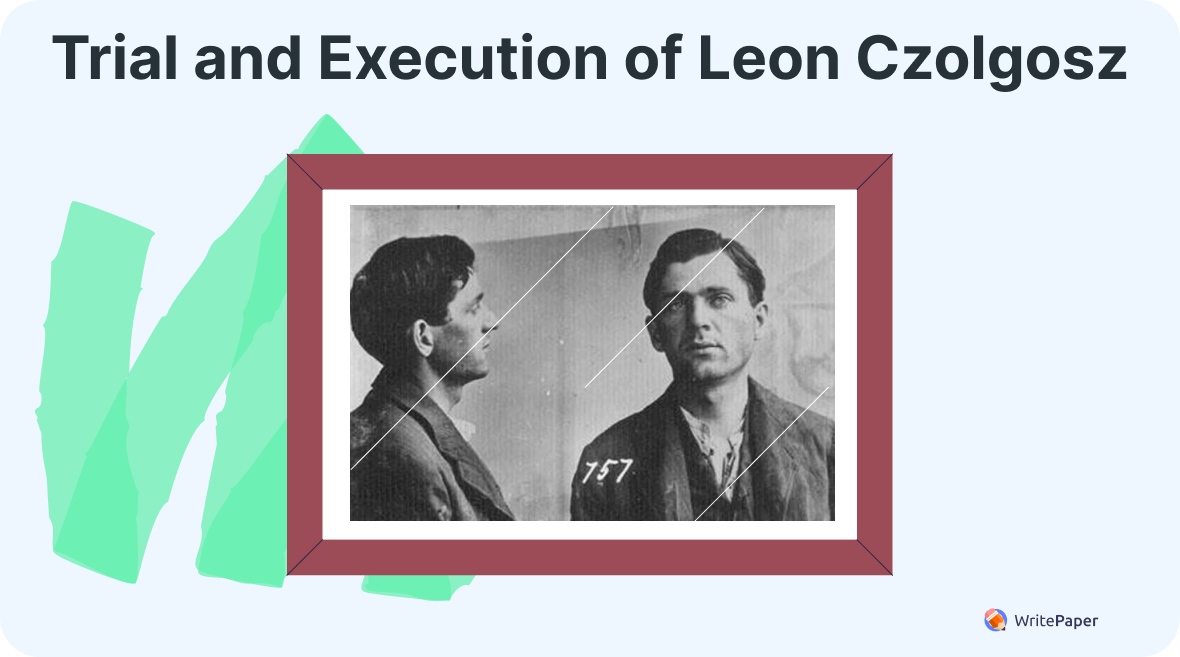
After the assassination of President William McKinley on September 6, 1901, Leon Czolgosz was swiftly apprehended by security and the public. Charged with murder, he faced trial in the Erie County Courthouse in Buffalo, New York. The trial began on September 23, 1901, and lasted only eight hours. Czolgosz initially pleaded not guilty but later changed his plea to guilty, refusing to offer any defense for his actions. The trial was marked by intense public interest and outrage over McKinley's assassination.
The prosecution presented evidence of Czolgosz's anarchist beliefs and his premeditated intent to kill the president. Witnesses recounted the events of the assassination, including Czolgosz's actions and statements leading up to the shooting. Despite Czolgosz's lack of legal representation, the court swiftly found him guilty of murder in the first degree.
Following his conviction, Czolgosz was sentenced to death by electrocution. His defense attorney, Robert Titus, appealed for a stay of execution, citing concerns about Czolgosz's mental state and the speed of the trial. However, the appeal was denied, and the execution proceeded as scheduled.
On October 29, 1901, just 45 days after McKinley's death, Czolgosz’s execution was performed at Auburn State Prison in New York. He was strapped into the electric chair and pronounced dead after two jolts of electricity. Czolgosz's body was later buried in an unmarked grave within the prison grounds.
The trial and execution of Leon Czolgosz highlighted the public's shock and horror at McKinley's assassination, as well as the swift and decisive response of the legal system. It also raised questions about the influence of radical ideologies and the need for heightened security measures to protect public figures. Czolgosz's actions left a lasting impact on American society, prompting increased vigilance against political extremism and further shaping the nation's approach to presidential security.
Need Assistance with Your History Essays?
Use our affordable service from seasoned academic penmen.
Lightship LV 82, also known as the Nantucket Lightship, was a crucial navigational aid stationed off the coast of Massachusetts, marking dangerous shoals and guiding ships through the treacherous waters of Nantucket Shoals. Commissioned in 1854, this light vessel was one of many lightships operated by the United States Lighthouse Service, later the United States Coast Guard, serving as floating lighthouses in areas where traditional lighthouses couldn't be constructed.
While Lightvessel LV 82 primarily served off the coast of Massachusetts, it has a connection to Buffalo, New York, through a significant historical event. In September 1901, President William McKinley was assassinated at the Pan-American Exposition in Buffalo. Following McKinley's death, his body was transported by train from Buffalo back to Washington, D.C., for funeral proceedings. As part of the journey, the train passed through Albany, New York, where it stopped briefly.
During this stop in Albany, the funeral train was accompanied by a guard of honor, including a contingent of U.S. Navy ships. Among these ships was Lightship LV 82, which had been temporarily moved from its station off the coast of Massachusetts to join the procession as a mark of respect for the fallen president.
The presence of the lightship as part of the funeral procession highlights its symbolic role in national events and its significance beyond its primary maritime duties. This historical moment is a reminder of the widespread impact of McKinley's assassination and how it touched various communities and institutions across the United States, including the crew of the Buffalo ship.
LV 82 faced numerous challenges throughout its decades-long service, including collisions with passing vessels and severe weather conditions. Despite these dangers, the dedicated crew aboard the lightship remained committed to their mission, ensuring the safety of countless ships navigating the waters off Nantucket. If you need a composition related to one of these topics, you can simply say, ‘write my paper for me,’ and our authors will do the rest.
Buffalo Grain Elevators
In the mid-19th century, Buffalo, New York, emerged as a crucial hub in the global grain trade, thanks in part to the innovative efforts of individuals like Joseph Dart. A Buffalo-based merchant and entrepreneur was the person who invented the grain elevator in 1842. This invention revolutionized the handling and storage of grain, particularly in port cities like Buffalo, where large quantities of grain were shipped and stored. In 1843, Dart introduced a groundbreaking grain-handling technology advancement – the steam-powered grain elevator. This invention revolutionized the efficiency of loading and unloading grain from ships, barges, and railroad cars, propelling Buffalo to the forefront of the grain trade.
Dart's steam-powered elevator was just one of many grain-handling innovations that transformed Buffalo's waterfront. The city's strategic location at the eastern terminus of the Erie Canal and its proximity to the Great Lakes made it an ideal location for the transshipment and storage of grain from the fertile agricultural regions of the Midwest to markets in the eastern United States and beyond.
Constructed primarily of concrete and steel, Buffalo's grain elevators rose as monumental structures along the waterfront, reaching over 100 feet. These "prairie skyscrapers," as they came to be known, featured a network of conveyor belts, chutes, and bins that facilitated the efficient transfer and storage of grain.
Dart's steam-powered elevator and other technological innovations helped solidify Buffalo's position as a dominant grain port. The city's waterfront became a bustling industrial landscape, with grain elevators dotting the skyline and processing facilities humming with activity.
While the importance of Buffalo grain elevators waned in the mid-20th century with transportation and storage technology changes, efforts have been made to preserve these iconic structures as symbols of the city's industrial heritage. Some have been repurposed for new uses, such as mixed-use developments, art spaces, and cultural attractions. In contrast, others stand as silent reminders of Buffalo's storied past as a powerhouse in the global grain trade. Through the preservation and adaptive reuse of these historic landmarks, Buffalo continues to honor its legacy as a key player in the evolution of the grain industry.
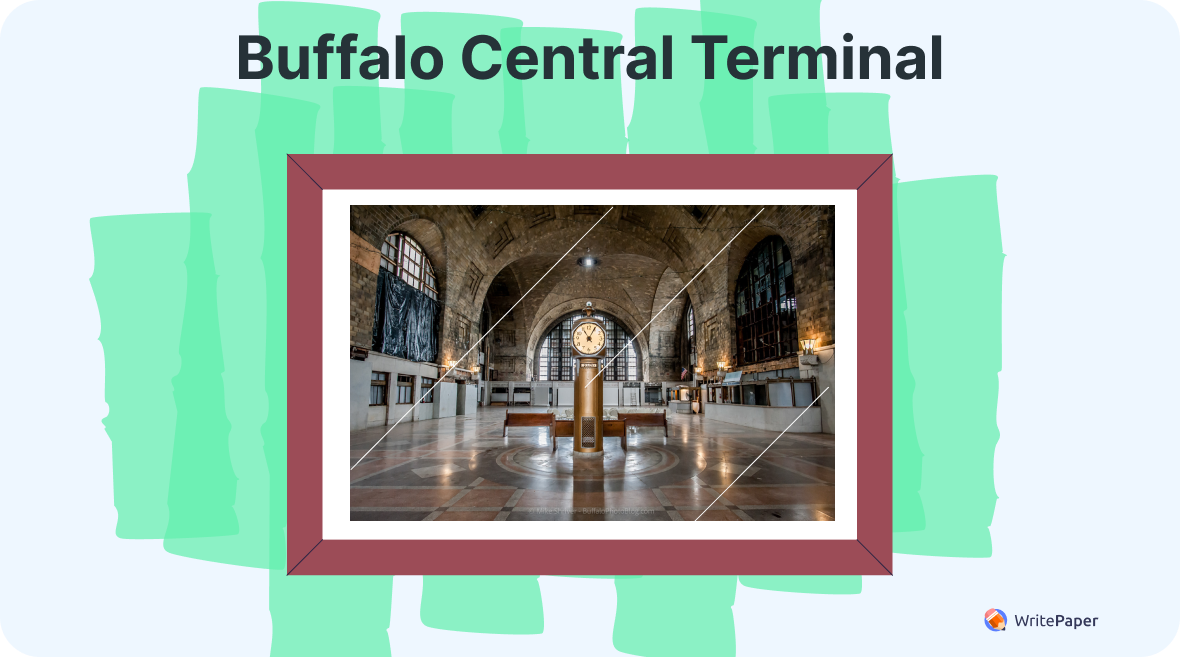
Buffalo Terminal is a testament to the city's rich railroad history and architectural grandeur. Completed in 1929, the terminal served as a major transportation hub for Buffalo, New York, connecting passengers to destinations across the United States and Canada. Designed by architects Alfred T. Fellheimer and Steward Wagner, the terminal's Art Deco style and towering structure made it an iconic landmark in the city.
Adjacent to the Central Terminal is the Buffalo Belt Line, a vital railroad corridor encircling the city. Constructed in the late 19th century, the Belt Line facilitated the movement of freight and passengers between Buffalo's industrial districts and outlying suburbs. The Belt Line played a crucial role in Buffalo's industrial boom, supporting the region's growth of manufacturing and commerce.
The Buffalo Central Terminal served as the focal point of the city's rail network, welcoming thousands of travelers daily. The terminal featured a concourse adorned with marble floors, ornate fixtures, and soaring ceilings, exuding elegance and sophistication. Its numerous platforms and tracks accommodated various trains, including long-distance passenger services, commuter trains, and freight shipments.
The city is also home to Exchange Street Station, a historic train station in Buffalo, NY. Opened in 1870, the station was a key transportation hub for passenger trains traveling between Buffalo and destinations throughout the Northeast and Midwest United States.
Buffalo-Exchange Street Station, designed by architect Thomas Rodd, originally served as the eastern terminus of the New York Central Railroad's mainline from Albany. The station's elegant Victorian-style architecture, characterized by its ornate brick facade and arched windows, reflected the grandeur of railroad travel during the late 19th century.
On September 16, 1901, the funeral procession for President William McKinley commenced from Buffalo, NY, departing the train station at approximately 8:30 AM. McKinley, who had succumbed to injuries sustained from an anarchist's bullet, passed away on September 14, following days of medical care that ultimately proved futile in controlling a severe post-operative infection.
The somber funeral train, draped in black bunting, was led by two locomotives. The first engine signaled the train's mournful journey with a long, mournful whistle as it traversed the tracks. Behind it, the second locomotive towed a series of cars, including a baggage car, a saloon car, and five Pullman lounges.
Each car held a distinct group of mourners and dignitaries. The first car accommodated members of the press, while the second housed McKinley's cabinet members. The third car was designated for the incoming President, Theodore Roosevelt, while the fourth carried McKinley's grieving family. Lastly, the final car, a glass-enclosed observation car, prominently displayed the President's coffin atop a bed of flowers, allowing the public to pay their respects as the train made its solemn journey.
Pan-American Exposition
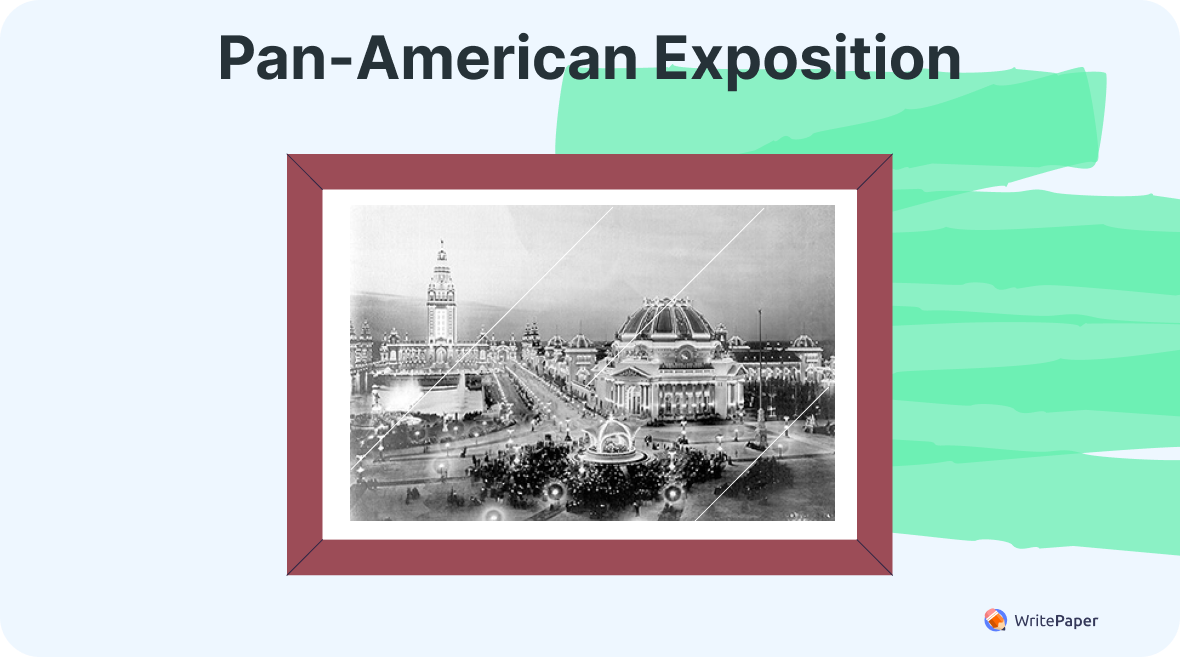
The Pan-American Exposition of 1901 is a landmark event in American history, showcasing the achievements of the United States and its neighboring countries in the Western Hemisphere. Held in Buffalo, New York, the exposition celebrated the progress and innovation of the Americas while also serving as a platform for cultural exchange and diplomatic relations.
The Pan-American Exposition was a grand spectacle featuring elaborate exhibits, dazzling displays of technology, and architectural marvels. The centerpiece of the exposition was the Electric Tower, a towering structure illuminated by thousands of electric lights, which symbolized the rapid advancements in electrical engineering during the turn of the 20th century.
One of the most iconic features of the Pan-American Exposition was the "City of Light," a sprawling complex of illuminated buildings and gardens that dazzled visitors with its beauty and innovation. The exposition also showcased the latest inventions and innovations, including the telephone, the X-ray machine, and the motion picture camera, which captivated audiences and demonstrated the progress of American industry and ingenuity.
In addition to its technological marvels, the Pan-American Exposition highlighted the cultural diversity of the Western Hemisphere, with exhibits showcasing participating countries' art, music, and traditions. It served as a platform for cultural exchange and diplomacy, fostering connections between nations and promoting understanding and cooperation among peoples.
However, the Buffalo Pan-American Exposition was marred by tragedy when President William McKinley was assassinated on its grounds on September 6, 1901. The shocking event cast a shadow over the exposition and left a lasting impact on American history.
Despite this tragedy, the Pan-American Exposition of 1901 remains a significant moment in the nation's history, reflecting the optimism, progress, and international cooperation of the turn of the century.
Summary
Buffalo's history intersects with President William McKinley primarily through the tragic events of his assassination at the Pan-American Exposition on September 6, 1901. As the host city of the exposition, Buffalo was a vibrant industrial and commercial center during McKinley's presidency, showcasing American progress and innovation.
McKinley's visit to the exposition, where he delivered a speech promoting peace and unity among the nations of the Western Hemisphere, was cut short by the assassination perpetrated by anarchist Leon Czolgosz. The assassination cast a shadow over Buffalo and left a lasting impact on the city's identity and development.
Despite the tragedy, Buffalo continued to thrive as an industrial powerhouse, with its grain elevators, transportation networks, and cultural institutions reflecting its enduring resilience and legacy as a significant American city.